
Knee pain is a common problem that can affect people of all ages. Whether it develops after a sports injury, prolonged physical activity, muscle weakness, or age-related changes, knee pain can make everyday activities more difficult. Walking, climbing stairs, exercising, standing for long periods, and even getting up from a chair may become uncomfortable.
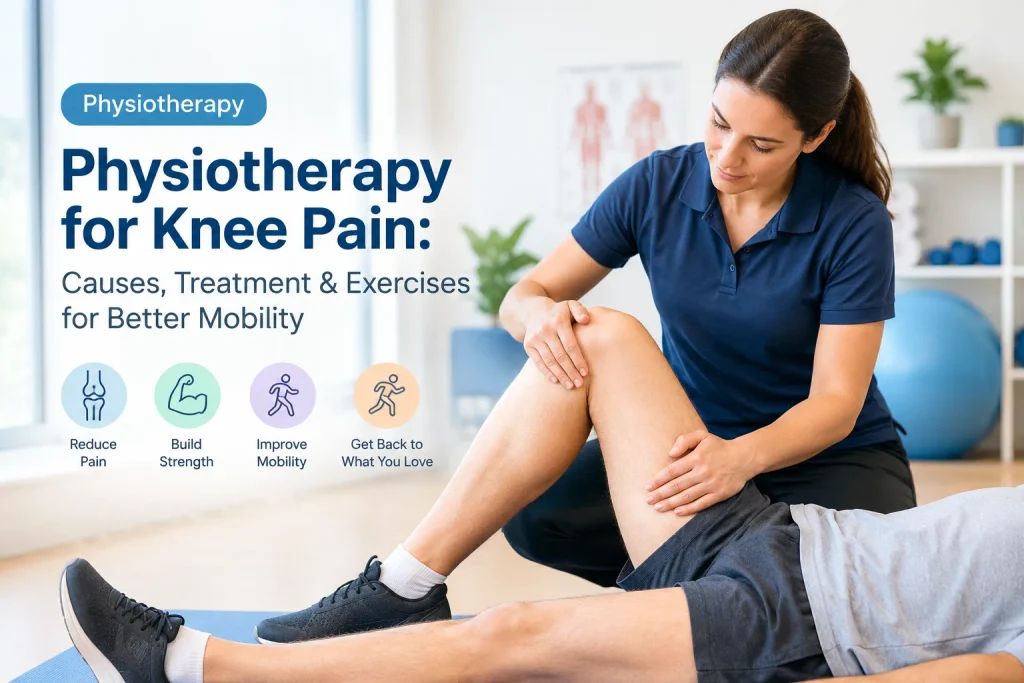
While some minor knee problems may improve with appropriate rest and activity modification, persistent or recurring pain should not be ignored. Physiotherapy can play an important role in improving knee movement, strength, flexibility, balance, and overall physical function.
What Causes Knee Pain?
The knee is a complex joint that connects the thigh and lower leg. It relies on muscles, ligaments, tendons, cartilage, and other structures to provide stability and allow movement.
Knee pain can develop for many different reasons. Common causes include:
- Sports injuries
- Muscle or ligament strains
- Knee sprains
- Overuse
- Muscle weakness
- Poor movement patterns
- Joint stiffness
- Previous injuries
- Sudden increases in exercise
- Age-related joint changes
Some knee problems occur suddenly, such as after a fall or sports injury. Others develop gradually due to repetitive stress or changes in physical activity.
Understanding the possible cause of your knee pain is important because treatment should be based on your individual symptoms and physical condition.
How Can Physiotherapy Help With Knee Pain?
Physiotherapy focuses on improving movement and physical function through assessment, exercise, education, and rehabilitation.
During an assessment, a physiotherapist may look at your knee movement, muscle strength, flexibility, balance, posture, and the way you perform everyday activities. They may also consider your work, exercise routine, previous injuries, and personal goals.
Based on this assessment, a treatment programme may focus on:
- Improving knee mobility
- Building muscle strength
- Increasing flexibility
- Improving balance and stability
- Developing better movement patterns
- Managing physical limitations
- Gradually returning to exercise and sports
The goal is to help you become more comfortable and confident with movement while improving the